Classic Spaghetti Carbonara
A rich and silky Roman pasta made with eggs, Pecorino Romano, guanciale, and black pepper — no cream required.
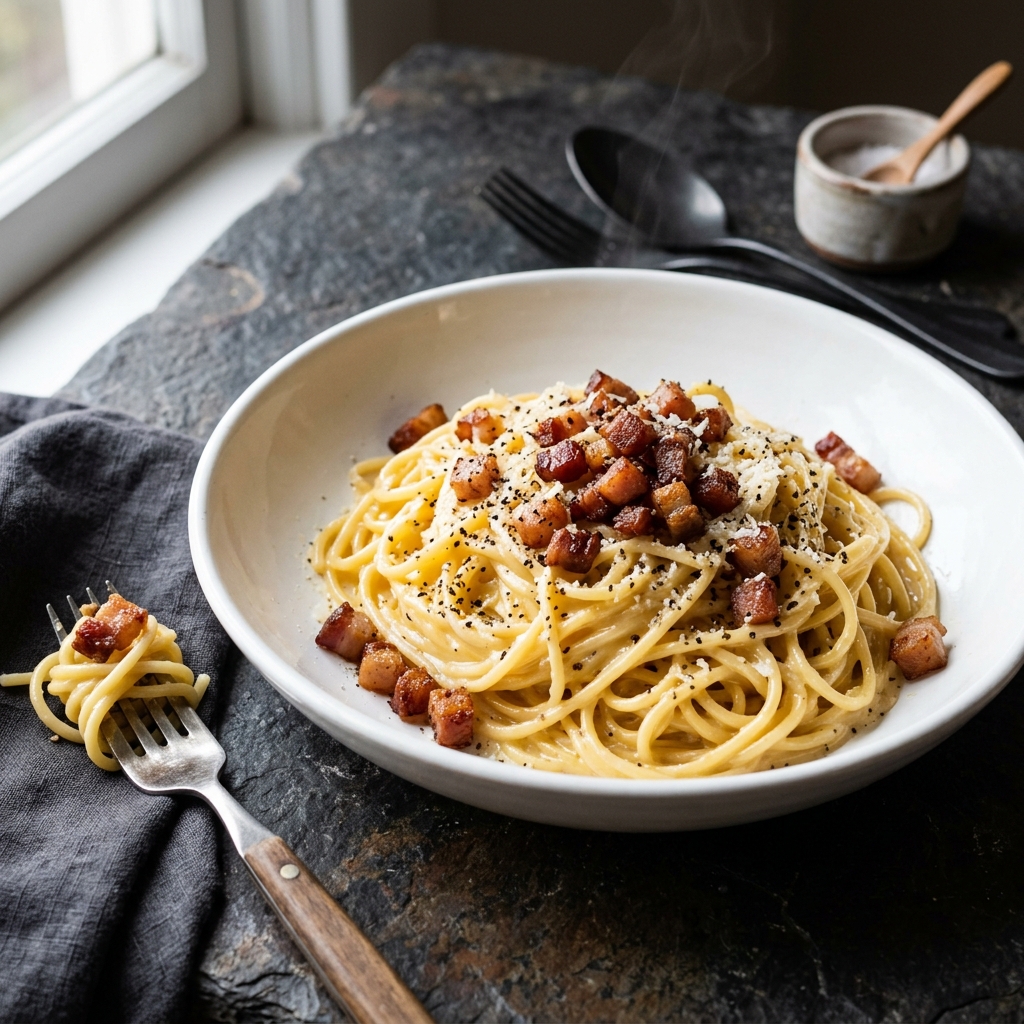
Carbonara is one of Rome's great pasta dishes. The secret is patience: the egg and cheese sauce must be emulsified off the heat so it stays glossy and creamy — never scrambled.
Ingredients
- 400g spaghetti
- 200g guanciale (or pancetta if unavailable), cut into small cubes
- 4 large eggs + 2 extra yolks
- 100g Pecorino Romano, finely grated (plus extra to serve)
- Freshly cracked black pepper
- Salt, for the pasta water
Method
- Bring a large pot of water to the boil. Salt it generously — it should taste like the sea.
- In a large bowl, whisk together the eggs, yolks, and most of the Pecorino. Season generously with black pepper. Set aside.
- Fry the guanciale in a cold pan over medium heat, stirring occasionally, until the fat has rendered and the pieces are golden and crispy. Remove from the heat.
- Cook the spaghetti until just al dente (1 minute less than the packet says). Reserve at least a mug of pasta cooking water before draining.
- Add the drained pasta to the pan with the guanciale. Toss to coat in the rendered fat.
- Let the pan cool for a minute — this is critical. Then add the egg and cheese mixture, tossing rapidly and adding a splash of pasta water to loosen. The residual heat will cook the eggs to a silky sauce without scrambling them.
- Keep tossing, adding more pasta water as needed, until the sauce is glossy and coats every strand.
Serve
Divide into warmed bowls. Finish with the remaining Pecorino and a generous grind of black pepper. Serve immediately.
Tips
- No cream. Authentic carbonara gets its creaminess from the egg yolks and cheese emulsified with starchy pasta water.
- Temperature is everything. If the pan is too hot when you add the eggs, you'll get scrambled eggs. Let it cool first.
- Guanciale vs pancetta. Guanciale (cured pig cheek) is the authentic choice and has a richer flavour. Pancetta works as a substitute.